
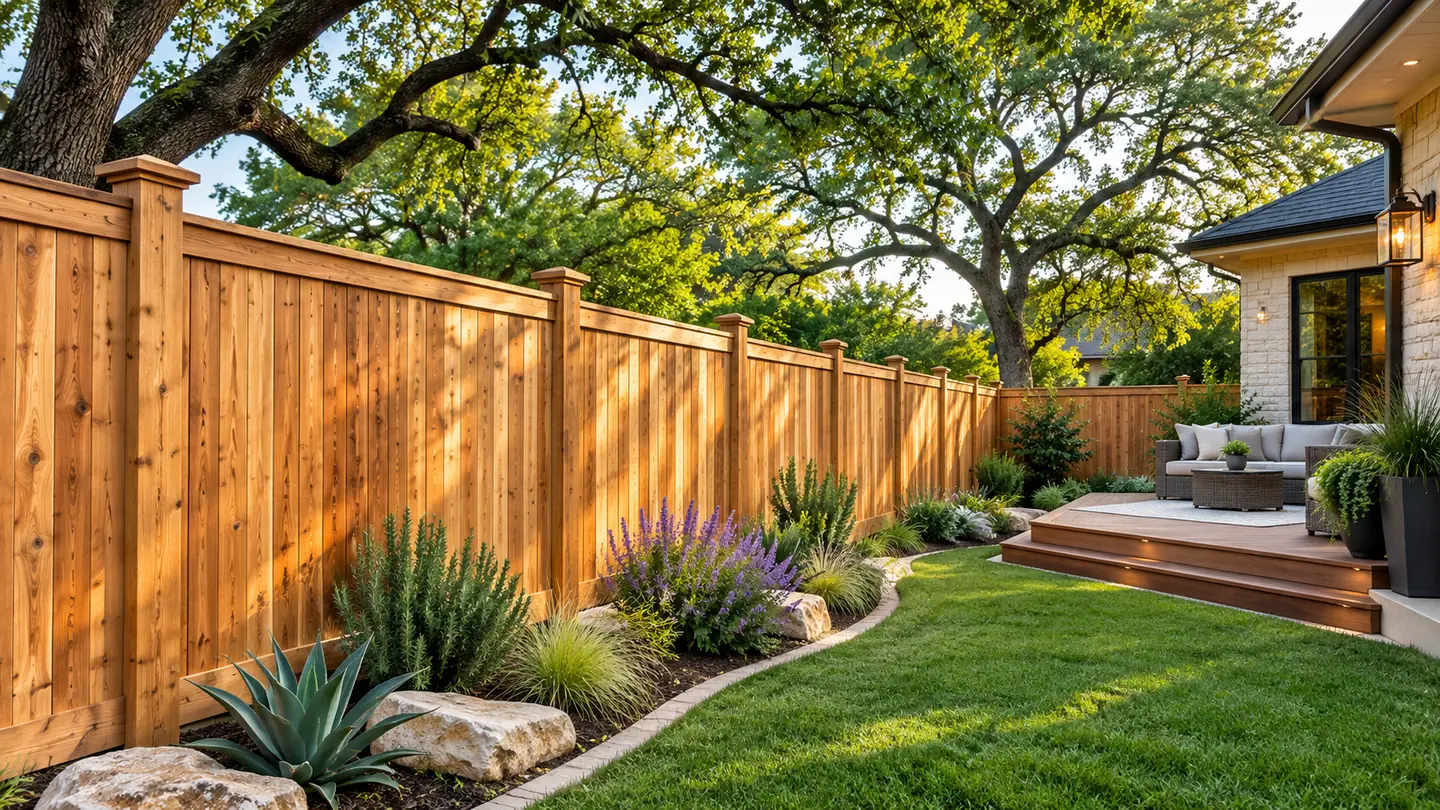
Design privacy around views, gates, garden beds and local property constraints. Use these checkpoints when reviewing the specific property and a written contractor proposal.
Privacy is about sightlines
Before selecting a height, stand at the places where privacy matters: the kitchen window, patio seating, deck and typical lawn area. Identify what must be screened and what should remain visible. A solid fence beside a neighbor’s elevated deck may not fully block sightlines. The goal is a practical boundary design, not simply a taller fence.
Side-by-side, board-on-board and horizontal
A side-by-side vertical fence creates a familiar look but boards can shrink and open small gaps. Board-on-board uses overlap to cover more sightlines while increasing material and labor. Horizontal fencing creates a modern pattern but post spans, framing, grade changes and board movement require attention. Ask to see how the selected detail will look from both sides.
Wood versus vinyl panels
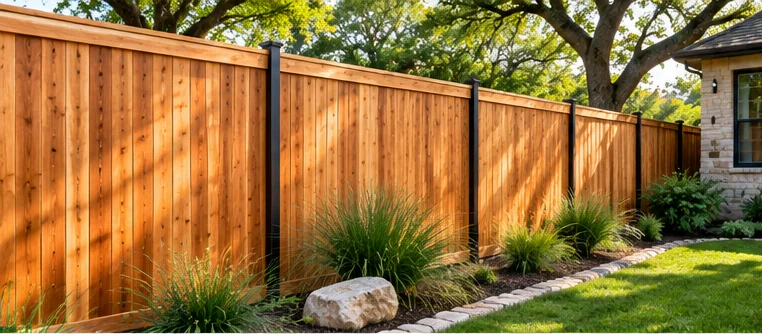
Cedar can be customized at corners, transitions and gates. Vinyl offers a manufactured panel system that typically requires cleaning instead of repeated staining. Compare sun exposure, color availability, replacement panels, wind rating, maintenance and the appearance of visible posts and gate frames.
Height and municipal approval
In Austin, fence height alone is not the only rule; right-of-way, floodplain and land-use conditions matter. A city’s permit exemption does not eliminate HOA requirements. Confirm the applicable rules before relying on a contractor’s informal assertion that “every six-foot fence is allowed.”
Privacy with light and airflow
A fully solid wall may create a different sense of enclosure than an open metal boundary. Consider combining materials selectively: privacy near seating and open ornamental fencing near a view, pool or landscape area. Each transition needs compatible posts and a tidy finish.
Design a complete scope
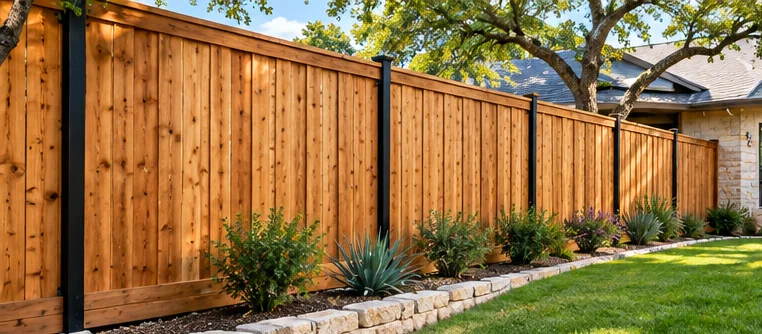
A meaningful estimate identifies the measured run, height at each segment, material grade, post type, gate schedule, old fence removal, finish, debris hauling and site restoration. Photograph utility meters, trees, irrigation, slopes and neighboring structures that might affect installation.
Frequently asked questions
Which material offers more screening?
Solid wood and privacy vinyl generally block more direct views than standard chain link or aluminum.
Is taller fencing always more private?
No. Sightlines from elevated windows and decks can remain, and greater heights can trigger restrictions.
Can materials be mixed?
Often, but transitions need compatible support and permitting or HOA approval where applicable.