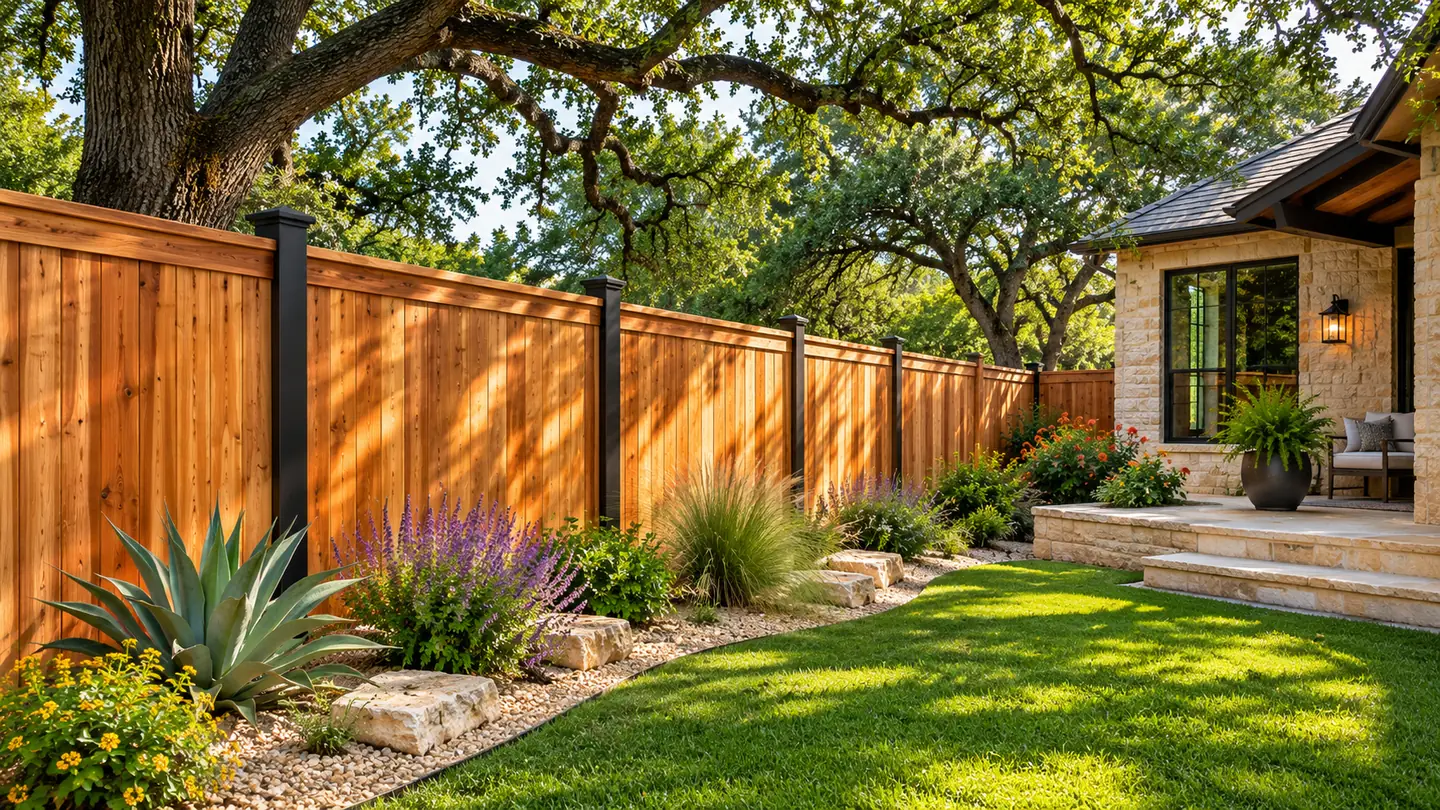
Cedar, pine, picket patterns, steel posts, gate choices, maintenance and what to ask before you buy. This guide focuses on the decisions that affect project quality, maintenance and long-term value.
Why cedar remains a popular privacy choice
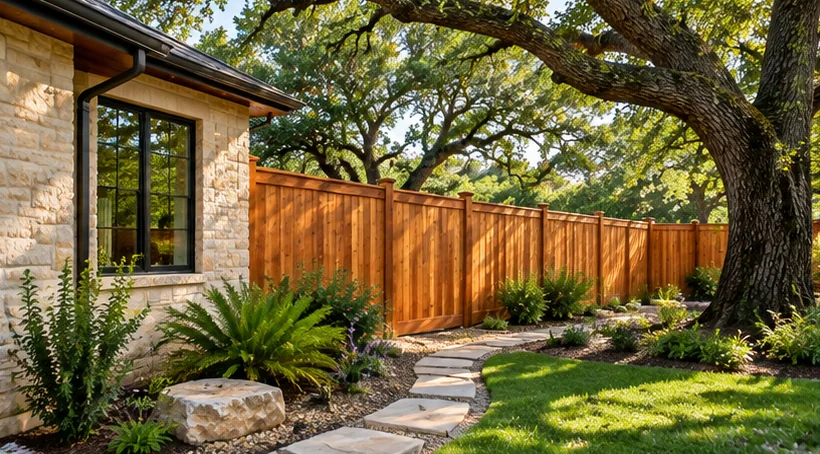
Wood is adaptable: a simple side-yard screen, a decorative front entry or a long run behind a patio can use the same familiar material but require very different details. Western red cedar is valued for its appearance and relative natural resistance to decay, though product grade, post design and finish influence the result more than the species name alone. Austin homeowners should evaluate the sun exposure on each run, drainage along the fence, privacy requirements and access for future upkeep. A statement that a fence is “cedar” does not specify board thickness, fastening, rails, post material or the treatment of cut ends. Ask for a materials schedule before comparing bids.
Privacy, board-on-board and horizontal designs
Traditional side-by-side vertical pickets are recognizable and usually straightforward to repair. Small gaps may develop as the boards dry, so they are not necessarily a continuous visual screen. Board-on-board fences overlap pickets to cover those gaps; the extra material adds weight, cost and exposure to wind. Horizontal fencing creates a contemporary line but needs an appropriate frame and intermediate supports to avoid bowing or sagging. Decorative top caps, trim, lattice details and alternating bays may help blend the fence with architecture. A homeowner choosing a style should think about both sides of the fence, especially on shared boundaries and corners visible from the street.
Steel posts versus wood posts
Posts determine whether an attractive panel stays straight. Steel posts can reduce some rot concerns and may make a fence easier to service, but the material thickness, coating, connections and footings still matter. A wood post may suit a rustic aesthetic or a certain attachment detail, yet its exposure to damp soil and ground-line deterioration should be considered. Ask whether the bid calls for steel posts with wood concealment, pressure-treated wood posts, or another detail. Also ask how installers handle utility conflicts, rocky ground, root systems and changes in grade; these are issues that should not be decided after the crew arrives.
Selecting a height, gate width and layout
A six-foot backyard fence may be sufficient for visual privacy, but a different height could be preferable at a slope, elevated patio or street frontage. Check both local code and HOA rules before deciding. Place pedestrian gates where people naturally walk rather than only where a contractor can fit one quickly. For maintenance equipment, compare the clear opening with the equipment width, including handles and wheels; a nominal four-foot gate does not always yield four feet of clear space. Two-leaf gates need good foundations and hardware because they are prone to drifting out of alignment when the opening settles or the leaves are not braced.
Weather, stain and upkeep
Central Texas sun, occasional heavy rain and the alternation between wet and dry periods can create expansion, shrinkage, graying and surface checking. These changes are not all signs of structural failure. Staining or sealing can help manage appearance and moisture exposure, but maintenance frequency depends on the finish system and site conditions. Keep sprinklers from constantly wetting boards, trim vegetation that traps moisture and inspect post bases after storms. Pressure washing too aggressively can damage soft wood fibers. Ask the installer what care guidance applies to the exact species and coating, and obtain product-specific instructions rather than relying on a blanket annual-maintenance claim.
Permits, boundaries and utility lines
A mailing address that says Austin may be governed by a suburb or unincorporated county. Check who has zoning or permitting authority over the parcel. Within Austin city limits, fencing rules vary with height, right-of-way and floodplain status; the city's published guidance should be consulted for current details. A survey is useful for locating legal boundaries, though physical evidence and professional boundary determinations may still be needed if markers are missing. Fence crews should coordinate utility locations through Texas 811 at least two business days before digging. HOA approval, easements and pool-barrier provisions are separate questions from a city permit.
How to compare wood-fence estimates
Request the same scope from each bidder: actual linear footage, height, picket pattern, post type and spacing, rails, fasteners, gates, removal, disposal, grading and finish. Clarify whether the quote includes taxes, permit application, materials delivery, debris removal and restoration of disturbed landscaping. A quote that looks cheaper can become more expensive if gate hardware or old-post extraction is excluded. Ask how variations are handled when limestone or another obstacle is found. For more reliable decisions, assess workmanship terms, warranty exclusions, crew supervision and whether the scope protects the neighboring property as well as your own.
Installation day and final walkthrough
Before work begins, photograph existing conditions and confirm access, pets, irrigation, landscaping and utility marks. Walk the proposed line with the contractor, mark each gate and confirm the finished side of the fence. During the project, inspect that damaged landscaping or old concrete is addressed as agreed, and ask how post holes were handled when obstructions occurred. At completion, look down the fence line for unexpected changes, open and latch every gate, inspect hardware, confirm that debris has been removed and collect maintenance guidance. Keeping a copy of the final specification makes a future repair much easier.
Frequently asked questions
Is cedar always better than pine?
Not automatically. Board grade, post details, coating, site exposure and maintenance can matter as much as species.
Is board-on-board more private?
Overlapping pickets usually provide stronger visual coverage as boards shrink, though the design needs enough support.
Should I choose steel posts?
Steel can be useful for durability, but compare steel gauge, coating, attachment details and footings in each bid.
How do I price a wood fence fairly?
Compare identical specifications including footage, gates, demolition, post method, permit work and disposal.